HOW IT WORKS
Two mechanisms, in order: a day-sized cycle that checks incoming work against the code it claims to change, and a session-sized loop that keeps everything a session learned. This page is the whole machine, in order.
ONCE A DAY
Work arrives from everywhere — a Slack thread, a meeting, a ticket, an error spike — gathered through your agent's own MCP connections. Before any of it reaches a human, read-only verification goes and looks at the actual code and answers one question: is this still true, and is it actually not done?
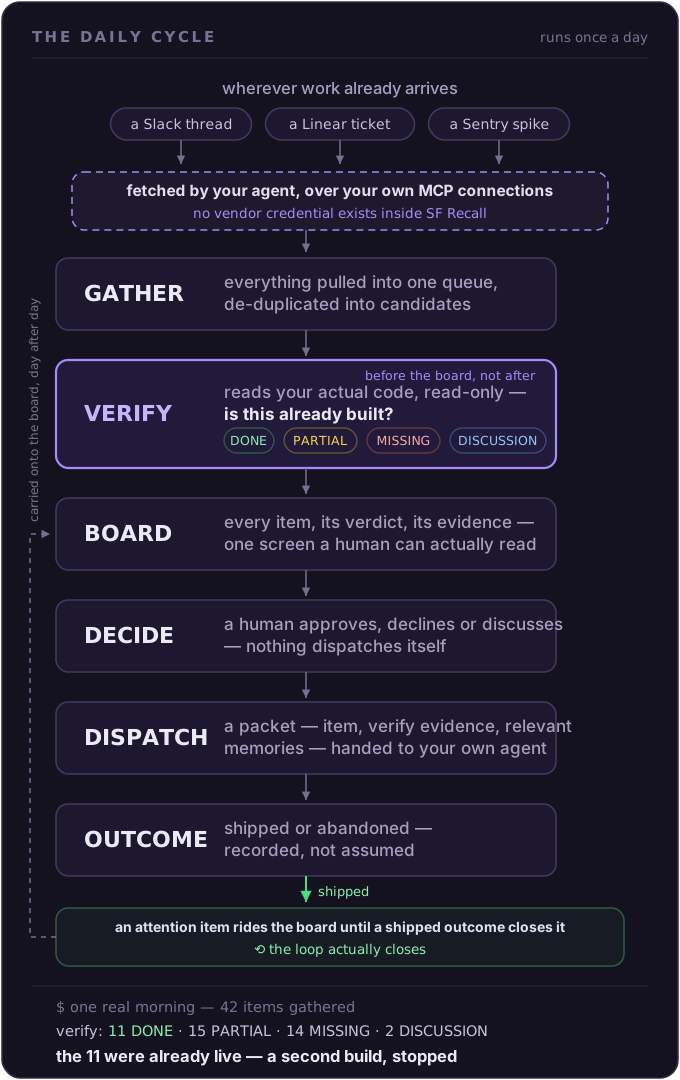
The verdict grammar — DONE, PARTIAL, MISSING, DISCUSSION — is lifted verbatim from the runs SaaS Factory does on itself. And a MISSING claimed while part of the workspace was unreachable is downgraded to DISCUSSION at the door: an admitted gap, never a confident guess.
EVERY SESSION
The session starts with what still governs: standing decisions, open attention items, the last handover — ranked by the files you are about to touch.
Decisions are deposited the moment they are made — because the end of a session often never arrives. A near-duplicate is refused: supersede the old answer instead of stacking a new one on it.
A running narrative of the session, written as it unfolds, so a session that dies mid-thought has already told the next one what it was doing.
The close names what was finished, what was not, and what to watch — and every unfinished thing becomes an attention item that reappears at every standup until someone closes it.
WHEN A SESSION DIES
The conversation itself is gone — a dead session is not resumable, and we do not pretend it is. But the diary was written during the session, the unfinished business is already an attention item, and the raw transcript synced as it went. The next standup opens with all of it.
THE WIPED LAPTOP
The workspace binding is a small file committed to the repository, so a fresh clone already knows where its memory lives. Reinstall, log in, and the new machine answers from the server: every conversation including subagents, every memory with its provenance, every diary, every attention item, the knowledge graph — even the sync watermark, so months of history are never re-uploaded or skipped.
What a wipe really destroys Uncommitted work — it was never anywhere but that disk. SF Recall is not a backup tool, and we will not describe it as one.
The local install: recovery is really wipe, re-clone, reinstall, log in — the credential is the one thing a wipe legitimately revokes.
Third-party content past its retention window — the work items and decisions derived from it persist; the source text ages out.